
How to Secure Web Applications from SQL Injection Attacks
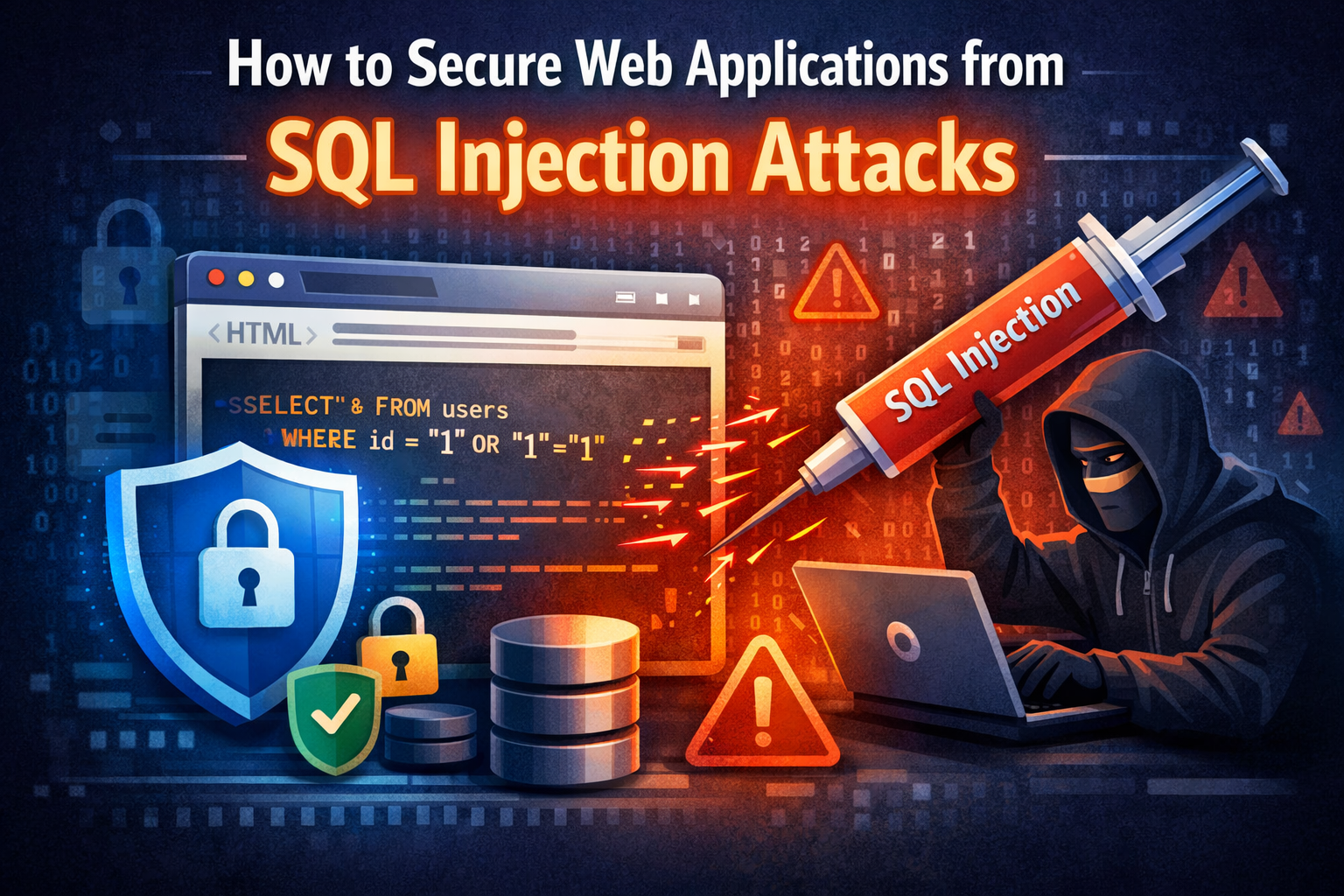
If you’re managing a database-driven site, your first priority isn’t the UI or the features. It’s knowing how to secure web applications from SQL injection attacks. It sounds intimidating, but at its core, an SQL injection (SQLi) is just a trick. An attacker finds an input field, drops in some malicious SQL code, and fools your database into running commands you never intended. The result? Anything from a leaked user list to a completely wiped database.
What’s Actually Happening During an Attack?
The root of the problem is a “trust issue.” Many developers accidentally build queries by gluing strings together something like SELECT * FROM users WHERE id = ‘ + $user_id. If a hacker changes that ID to ‘1’ OR ‘1’=’1′, they’ve suddenly bypassed your login logic. To truly understand how to secure web applications from SQL injection attacks, you have to stop treating user input as “part of the command.” The database isn’t smart enough to tell the difference between your code and a hacker’s input unless you separate them.
3 Battle-Tested Methods: How to Secure Web Applications from SQL Injection Attacks
- Switch to Prepared Statements (The Gold Standard): If you take away one thing, let it be this: prepared statements are the ultimate way how to secure web applications from SQL injection attacks. By using placeholders (like :email), you send the query template to the database first, then the data separately. The database never executes the data.
For a deeper dive into the syntax and different drivers available, you can refer to the official PHP Manual on Prepared Statements and Stored Procedures, which remains the definitive resource for developers.
PHP
// Use PDO to stop SQLi in its tracks
$stmt = $pdo->prepare(‘SELECT * FROM users WHERE email = :email’);
$stmt->execute([’email’ => $userEmail]);
$user = $stmt->fetch();
- Sanitize Every Single Input: Think of this as your secondary filter. Use PHP’s filter_var() for emails or (int) casting for numbers. While it’s not a standalone fix, it’s a crucial layer in how to secure web applications from SQL injection attacks.
- Use the “Least Privilege” Rule: Don’t give your web app’s database user “God Mode.” If your app only needs to read and write posts, don’t give it permission to DROP tables. This limits the “blast radius” if someone actually finds a hole in your code.
Why You Can’t Afford to Wait
When you look up how to secure web applications from SQL injection attacks, you’ll realize that automated bots are hitting your site every minute looking for weak spots. A single lazy line of code can ruin your reputation. By sticking to PDO and parameterized queries, you aren’t just writing code; you’re building a fortress. Mastering how to secure web applications from SQL injection attacks is what separates a hobbyist from a professional developer.
